The Nazi concentration-camp system was not simply a collection of prisons where violence occasionally broke out. It was an expanding structure that made suffering routine. Punishment was written into regulations, labor was organized through schedules, prisoners were reduced to numbers, and medical knowledge was redirected toward experimentation and death. The system’s most disturbing feature was not only the cruelty it permitted, but the way it turned cruelty into an administrative task.
From the first camps established in Germany in 1933 to the death marches of early 1945, the system changed in scale and purpose. It began as an instrument for terrorizing political opponents. It grew into a continent-wide network used for persecution, forced labor, imprisonment, medical experimentation, and mass murder. At every stage, bureaucratic language helped conceal the human reality behind official decisions.
From improvised brutality to an organized system
The first official Nazi concentration camp opened at Dachau on March 22, 1933, less than two months after Hitler came to power. Its early prisoners included socialists, communists, trade unionists, journalists, and other political opponents. Many were not charged through an ordinary judicial process. They were detained because the new regime had defined them as threats.
Early violence could be chaotic and openly personal. Prisoners were beaten, humiliated, and sometimes killed. When state prosecutors attempted to investigate deaths at Dachau, the camp’s first command structure was quietly changed. The lesson drawn by the SS was not that brutality should end. It was that uncontrolled brutality created administrative and political problems.
Theodor Eicke helped transform Dachau into a model for the wider camp system. Under his direction, punishment was codified in a disciplinary and penal framework. The rules specified offenses, penalties, instruments, positions, and witnesses. A prisoner might be sentenced to a fixed number of lashes for speaking during roll call, approaching a fence, or allegedly making an inflammatory statement. The official presence of a medical officer did not protect the prisoner. It helped ensure that the punishment could be completed.
This was a crucial development. Violence no longer depended on the mood of an individual guard. It became a procedure that could be taught, repeated, documented, and exported. SS personnel trained at Dachau carried its methods to camps including Sachsenhausen, Buchenwald, and Flossenbürg. The bureaucratization of cruelty became an operating standard.
The destruction of identity
For many prisoners, the assault began before the first beating. Clothing was removed, hair was shaved, possessions were taken, and names were replaced with numbers. These acts were not merely practical measures. They were a deliberate attack on identity.
Many early prisoners had been professionals: lawyers, physicians, teachers, civil servants, and elected politicians. The system sought to make their previous status irrelevant. A respected judge forced to bend over a whipping block in front of fellow prisoners was not only being physically punished. He was being publicly stripped of the identity and social standing that had once offered protection.
Forced labor reinforced this process. At Dachau, prisoners were ordered to carry heavy stones, sometimes moving them from one place to another without a meaningful productive purpose. The point was exhaustion and submission. Work became a demonstration that the authorities controlled another person’s body, time, and movement completely.
In the early years, some prisoners were released after months or years. This limited possibility of release served the regime’s broader terror. Survivors could carry knowledge of the camps into German society, while the conditions of their freedom encouraged silence. The camps were prisons, but they were also warnings.
Torture beyond the camp gates
Many prisoners encountered another layer of the system before reaching a concentration camp. The Gestapo operated interrogation sites in regional headquarters, temporary detention centers, prisons, and cellars. Its official language included the phrase “enhanced interrogation,” an administrative expression that created distance between the act and its meaning.
In practice, interrogation could involve sleep deprivation, systematic beatings, stress positions, simulated drowning, and threats against relatives. Directives established when enhanced interrogation could be used and who had to approve it. The paperwork did not make the violence less real. It showed that violence had been given an institutional pathway.
Gestapo torture often had a specific purpose: extracting information, confessions, or names. This gave it a transactional character. Refusal could bring escalation. Cooperation could expose friends, relatives, or resistance networks. A prisoner might survive the room only to carry the knowledge that someone else had been placed in danger.
Uncertainty was another instrument. Prisoners were not told how long questioning would last, whether they would be released, whether they would be transferred, or whether their families had been arrested. When people are denied the ability to calculate even the immediate future, fear becomes self-sustaining.
When imprisonment became a path to death
The camp network expanded rapidly after Germany’s territorial conquests. By the war’s later years, it included a vast collection of main camps, subcamps, transit sites, labor facilities, and detention centers across occupied Europe. Its purpose also changed. Camps that had initially held political enemies increasingly became places where prisoners were expected to work until they were broken or killed.
The genocide of Europe’s Jews was integrated with this system. Deportations, selections, forced labor, starvation, executions, and gassing operated through interconnected institutions. The boundary between torture and murder disappeared because the conditions of daily imprisonment were themselves lethal.
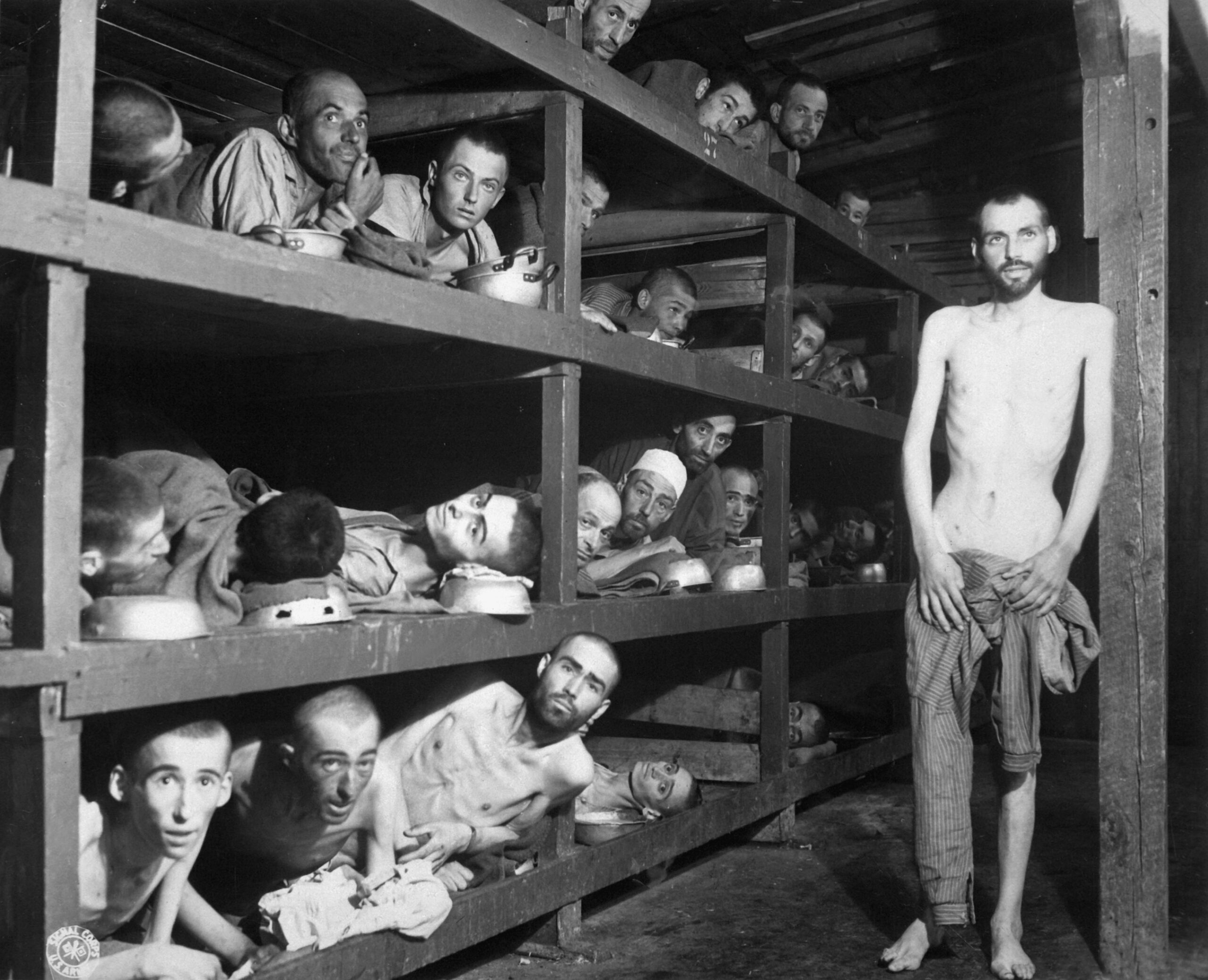
Prisoners were subjected to roll calls, beatings, hunger, exposure, overcrowding, disease, and exhausting labor. Food rations were calculated to sustain work for a limited period, not to preserve health over a normal lifetime. A person could be murdered immediately, or could be destroyed through a process that made death appear as the final result of administrative attrition.
Medicine turned against the prisoner
The medical personnel of the SS occupied a particularly disturbing place in the system. Their professional credentials, which should have represented care and restraint, were used to authorize and conduct experiments on people who had no ability to consent.
At Dachau, experiments on hypothermia subjected prisoners to freezing water and monitored their decline. Some were later exposed to experimental rewarming methods. The stated purpose was military research into the survival of pilots and sailors exposed to cold. The institutional setting gave the experiments a scientific appearance, but no scientific vocabulary could change the fact that the subjects had been imprisoned, coerced, and treated as expendable.
At Ravensbrück, Polish political prisoners were used in experiments involving deliberately infected wounds. Their legs were cut and contaminated with bacteria, glass, or wood fragments so that researchers could test treatments. Many survivors lived with permanent physical damage and spent decades seeking recognition and compensation.
At Auschwitz, Josef Mengele conducted research involving twins and people with physical differences. Children were among those subjected to injections, blood draws, surgery, and other interventions. The language of genetics and heredity concealed a basic reality: the people being studied had been denied every right normally associated with medical care.
The significance of these crimes lies not only in the individuals who committed them. The experiments had requests, funding, institutional sponsors, records, and professional networks. Medicine did not collapse because all medical knowledge disappeared. It was redirected by an institution that had already classified certain people as less than fully human.
Why resistance was so difficult
It is easy to ask why more prisoners did not resist. That question overlooks the mechanisms designed to make resistance nearly impossible.
Collective punishment was central. An attempted escape or act of sabotage could lead to the execution of prisoners from the same barracks, transport, or group. At Auschwitz, the threat that other prisoners would be killed for one person’s escape made every act of defiance a moral calculation imposed by the guards.
The prisoner-functionary system created another barrier. Kapos and other prisoners were given authority over fellow prisoners in exchange for marginally better conditions. Some used these positions to protect others. Others became instruments of violence. The arrangement placed an additional layer between the SS and the prisoner population while allowing Nazi administrators to portray prisoner-on-prisoner violence as evidence of supposed criminality.
Families were separated on arrival. At Auschwitz, the selection process could divide parents from children within minutes. The destruction of family bonds produced grief, confusion, and isolation before prisoners even entered the camp routine.
Yet resistance continued. Prisoners preserved names and events in secret writings. Members of the Sonderkommando buried testimony near the crematoria. Rudolf Vrba and Alfred Wetzler escaped Auschwitz in 1944 and helped produce a detailed report on the camp’s operations. In October of that year, members of the Sonderkommando staged an armed revolt and destroyed part of a crematorium. These actions did not dismantle the system, but they demonstrated that the attempt to eliminate human agency never fully succeeded.
Deportation as logistics
In the spring and summer of 1944, approximately 437,000 Hungarian Jews were deported to Auschwitz-Birkenau over a period of 56 days. The speed of the operation exposed the regime’s transformation of mass murder into a logistical project.
People were first concentrated in ghettos and then packed into sealed freight cars. Journeys could last several days, with little water, no sanitation, and extreme heat. Some passengers died before the trains arrived. Those who survived reached the selection ramp dehydrated, exhausted, and grieving.
At Birkenau, people were separated by sex and directed toward labor or immediate death. A gesture from an SS physician could determine the outcome. Large transports could be processed in less than an hour. The language used by administrators focused on capacity, schedules, transport, and output. That language is revealing precisely because it is so ordinary. It shows a bureaucracy that had normalized murder so thoroughly that it no longer needed to describe itself in openly violent terms.
The final convulsion: the death marches
As Soviet forces approached Auschwitz in January 1945, the SS evacuated tens of thousands of prisoners. Beginning on January 18, approximately 60,000 people were forced westward in winter conditions. They were given little food and inadequate clothing. Those who fell behind were shot.
The death marches were not merely desperate military improvisations. In many places, prisoners could have been left in the camps for advancing forces to find. Instead, the SS chose to continue controlling and killing them even as the Nazi state collapsed.
Prisoners died from exposure, starvation, exhaustion, and gunfire. Civilians watched columns of emaciated people pass through towns. Some offered food or water; others looked away. In several locations, including the Baltic coast, large groups of Jewish women were massacred during evacuation.
The marches revealed the system’s final logic. People who had survived years of forced labor, hunger, disease, and punishment could still be killed during the last weeks of the war. The machinery of persecution continued operating even after its military purpose had effectively disappeared.
Evidence, testimony, and the unfinished aftermath
When the camps were liberated, the perpetrators had tried to destroy records and physical evidence. Crematoria were demolished, documents were burned, and prisoners were removed. The destruction was incomplete. At Auschwitz, liberating forces found thousands of survivors and warehouses filled with clothing, shoes, and other belongings taken from people who had been murdered.
Postwar trials assembled documents, photographs, and testimony into a legal record. The testimony was not offered as a therapeutic exercise. Survivors were questioned and cross-examined in rooms where defendants sat listening. They had to describe their experiences in precise detail so that crimes could be established under legal standards.
The medical trials produced the Nuremberg Code, including the principle that voluntary consent is essential in human experimentation. Other proceedings established the responsibility of commanders, administrators, physicians, and officials. Still, the courts reached only a fraction of those involved. Some perpetrators escaped through postwar networks and lived for decades without facing trial.
Survivors also faced a second struggle: persuading societies to listen. Many communities did not want to discuss deportations that had taken place in their own streets. Former Nazis returned to professional life in postwar Germany. Legal testimony often captured dates and procedures while leaving little room for grief, dissociation, survivor guilt, and the long psychological consequences of imprisonment.
What the system reveals
The history of the Nazi camps moved through recognizable stages: improvised terror, codified punishment, forced labor, industrialized murder, medical exploitation, and collapse. At every stage, ordinary institutions helped make the next stage possible.
Administrators maintained files. Doctors supplied expertise. Engineers built facilities. Railway workers moved deportees. Lawyers shaped categories. Guards enforced orders. Professionals who might have considered themselves distant from direct violence helped maintain the structure that made violence possible.
This does not reduce the responsibility of the leaders who designed and directed the system. It clarifies how such a system operated. Its power came from the combination of ideology, lawlessness, professional compliance, routine, and the progressive removal of safeguards.
The record survives because prisoners wrote, remembered, buried documents, testified, and insisted that the world confront what had happened. Remembering is not only an act of mourning. It is an act of vigilance. The camps demonstrate how quickly categorization and administrative routine can become instruments of destruction when law, conscience, and the recognition of shared humanity are removed.
More than six million Jews were murdered in the Holocaust, along with millions of other victims, including Roma and Sinti, Soviet prisoners of war, Polish civilians, people with disabilities, political prisoners, Jehovah’s Witnesses, and gay men. The number of people tortured without being killed cannot be calculated completely. What can be preserved is the evidence: names, dates, orders, testimonies, photographs, and the traces left behind by a system that attempted to turn human beings into entries in a file.