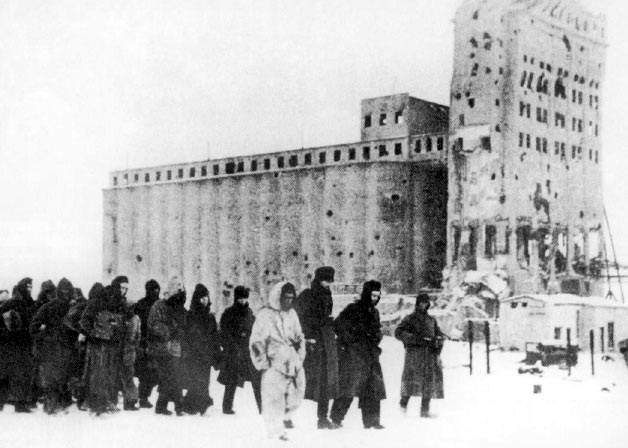
In the years after 1945, the defeated German military did not simply disappear. Its institutions were dismantled, its leaders were interrogated, and its crimes were examined at Nuremberg. Yet the knowledge carried by many former German officers soon became valuable to the powers preparing for a new confrontation with the Soviet Union.
That contradiction—between prosecuting a criminal regime and recruiting people who had served it—formed one of the darker foundations of the Cold War. It also created unexpected connections between the battlefields of the Eastern Front, the French war in Indochina, and the American intervention in Vietnam.
From Defeat to Intelligence Asset
When Germany surrendered in 1945, the Western Allies faced a rapidly changing strategic landscape. The Soviet Union had been an ally against Hitler, but it was also becoming the central rival of the emerging postwar order. American planners urgently wanted information about the Red Army: its organization, tactics, commanders, logistics, and likely behavior in a future conflict.
One of the most important figures in this transition was Reinhard Gehlen, who had headed the Wehrmacht’s Foreign Armies East section. As Germany collapsed, Gehlen preserved intelligence files on the Soviet military and surrendered to American forces with a proposal: his archives, contacts, and expertise in exchange for protection and continued employment.
The arrangement became the Gehlen Organization, a U.S.-sponsored intelligence network that later evolved into West Germany’s foreign intelligence service, the BND. Its ranks included former Wehrmacht officers and, as later investigations established, a significant number of former SS and Gestapo personnel. The organization was not an isolated exception. Across occupied Germany, intelligence agencies and military institutions recruited people whose experience was considered useful in the struggle against communism.
Not every former German soldier was a war criminal. The Wehrmacht included conscripts, career officers, committed Nazis, administrators, and men involved directly or indirectly in atrocities. That diversity matters. It does not, however, erase the institutional problem: screening was often incomplete, manipulated, or subordinated to strategic priorities. Men who might have faced prosecution instead received new identities, salaries, and missions.
The French War in Indochina
Another route carried former German soldiers into Southeast Asia. After Japan’s defeat, France attempted to restore its colonial rule in Indochina. The Viet Minh, led politically by Ho Chi Minh and militarily by Vo Nguyen Giap, built a disciplined insurgency that challenged French power across the region.
The French Foreign Legion needed manpower, and postwar Europe supplied large numbers of veterans with military experience and few attractive prospects. Germans joined the Legion in substantial numbers, including former Wehrmacht soldiers and, in some cases, former SS personnel. Their motives varied. Some wanted money or escape from a ruined Germany. Some feared investigation into their wartime conduct. Others saw the conflict as another front in the struggle against communism.
Legion service offered anonymity. The institution’s traditions made it possible for men with complicated pasts to begin again under a new identity. In Indochina, these veterans brought experience in small-unit tactics, field logistics, counterinsurgency, and operating under severe pressure. Much of that experience had been acquired in campaigns where German forces had carried out brutal reprisals and collective punishments, especially in Eastern Europe and the Balkans.
The decisive French defeat came at Dien Bien Phu in 1954. After a 55-day siege, the fortified valley fell to the Viet Minh. Thousands of French and allied troops became prisoners, including German Legionnaires. Some died in captivity. Others returned to Europe. A smaller number took an entirely different path.
German Defectors to the Viet Minh
The Viet Minh recognized that prisoners were not only military liabilities. They could also become political resources. German Legionnaires were particularly susceptible to arguments that they were serving a colonial power in a war that had little to do with Germany. Vietnamese interrogators and political officers presented the conflict as a struggle against imperialism and linked Western colonialism to the capitalist order that had supported Hitler’s enemies and allies alike.
Some German prisoners defected. The exact number remains uncertain, but French and Vietnamese accounts indicate that the phenomenon was more than a handful of isolated cases. Defectors could train troops, translate, write, or participate in radio broadcasts aimed at German-speaking soldiers. Some remained in North Vietnam after the Geneva settlement and built new lives there.
Erwin Borchers is often cited as the clearest individual example. A former German soldier who later served in the Foreign Legion, he was captured in Indochina, joined the Viet Minh, adopted a Vietnamese name, and stayed in North Vietnam. He worked as a teacher and translator, becoming a minor participant in the intellectual life of the communist state.
His trajectory captures the instability of political identity after 1945. A man shaped by the Eastern Front could become a colonial soldier, then a prisoner, and finally a participant in a revolutionary society. The Cold War’s rigid division between communist and anti-communist camps was constantly producing such improbable reversals.
Doctrine, Advisers, and Vietnam
After the French withdrawal, the United States expanded its support for South Vietnam. American officials were searching for ways to fight an insurgency that operated through villages, local networks, and concealed political organization rather than conventional front lines.
Some connections between former German military experience and Vietnam were direct, while others were institutional. West Germany’s rearmament and integration into NATO brought former Wehrmacht officers into senior positions. Generals such as Hans Speidel, Adolf Heusinger, and Johann Adolf Graf von Kielmansegg became influential figures in the postwar Western military structure. Their presence helped transfer German operational concepts into the broader alliance.
The United States also developed unconventional warfare programs that emphasized irregular forces, local intelligence, village defense, and operations behind enemy lines. The Green Berets’ work with Civilian Irregular Defense Group units in Vietnam relied on indigenous fighters supported by American advisers. Such methods had precedents in several earlier conflicts, including British campaigns in Malaya, French operations in Algeria, and German efforts to organize local auxiliaries in Eastern Europe.
It is difficult to prove a single chain of transmission from German veterans to particular American operations. Military doctrines rarely travel in a straight line. They are adapted by institutions, passed through instructors, and reshaped by local conditions. Still, the presence of former German personnel in Western intelligence and military networks created channels through which assumptions about counterinsurgency could circulate.
The Moral Cost of Pragmatism
The most serious issue is not whether every former German veteran in Vietnam was a criminal or whether German doctrine alone caused American abuses. Neither claim can withstand careful examination. The issue is the willingness of institutions to treat operational usefulness as more important than moral history.
Programs such as Phoenix sought to dismantle the Viet Cong’s political infrastructure through intelligence, arrests, defections, and killings. The program produced large numbers of deaths and arrests and remains associated with allegations of extrajudicial execution. South Vietnamese prisons, supported and advised by American personnel, became sites of torture. The massacre at My Lai revealed how counterinsurgency could become the systematic killing of civilians.
These crimes had many causes: command decisions, racism, fear, institutional pressure, failures of accountability, and the nature of the war itself. Assigning responsibility to a small group of former German officers would oversimplify that history. But ignoring the backgrounds and methods carried through postwar networks would also be misleading. Experience acquired in campaigns where civilian life was treated as an obstacle could shape ideas about acceptable cost, even when the original political context had changed.
What the Archives Still Conceal
Much of this history remains difficult to reconstruct. Intelligence records concerning the Gehlen Organization, the BND, the CIA, and Cold War paramilitary programs have been classified for decades. The available evidence is therefore uneven: a documented career here, a memoir there, a journalistic investigation, and institutional records that reveal patterns without identifying every individual.
Later revelations showed why the gaps matter. The postwar intelligence system protected figures such as Klaus Barbie, the former Gestapo chief in Lyon, who escaped to Bolivia with assistance from American intelligence contacts. Barbie had no direct role in Vietnam, but his case exposed the logic of the wider system: anti-communist usefulness could buy protection from accountability.
German historical research has also dismantled the myth of a “clean Wehrmacht.” The regular army participated in mass killings, prisoner abuse, starvation policies, and the broader war of annihilation in the East. A person’s service in the Wehrmacht does not automatically establish individual guilt, but neither does it establish innocence. Each career requires examination on its own evidence.
The Lesson of the Two Wars
The movement of personnel and doctrine from Nazi Germany into the Cold War was not an accidental footnote. It was the result of deliberate decisions made by governments that believed a new emergency justified compromising old principles. Nuremberg declared that individuals could be held responsible for crimes committed in the service of the state. Almost immediately, the same victorious powers recruited people whose wartime records raised precisely those questions.
That contradiction continued into Vietnam. Former German soldiers appeared in different roles: Legionnaires, intelligence officers, NATO advisers, instructors, and alleged participants in covert networks. Some fought for Western governments. Some defected to the Viet Minh. Most disappeared into institutions that had little incentive to preserve an uncomfortable record.
The deeper story is not about exotic biographies. It is about how organizations carry ideas across wars. Methods, habits, assumptions, and definitions of necessity can survive the collapse of the regimes that created them. They can be repackaged as expertise, stripped of context, and placed at the service of a new cause.
When the last American forces left Vietnam and Saigon fell in 1975, the men who had crossed these historical boundaries dispersed into retirement, intelligence work, military institutions, or silence. Many died before their records were fully examined. The unresolved question they left behind is one every democratic state must confront: what values are surrendered when expediency becomes the highest test of usefulness?
The answer cannot be found in a simple division between good and evil, nor in the comforting belief that a new uniform creates a new moral identity. It lies in the records, the institutions, and the choices made when governments decide that the past is inconvenient but expertise is indispensable.