Sobibor was created to make mass murder fast, organized, and difficult to see. Hidden in a pine forest in occupied eastern Poland, it became one of the three principal killing centers of Operation Reinhard, the Nazi program that destroyed much of Polish Jewry. Most people sent there were murdered within hours of arrival. The camp was later dismantled, plowed under, and covered with trees in an attempt to erase both the crime and the evidence.
That attempt failed. Survivor testimony, postwar trials, archaeological research, and the courage of prisoners who resisted have preserved the history of Sobibor. The site stands as a record of the Holocaust’s bureaucratic logic, but also of people who refused to let the camp have the final word.
A Camp Designed for Murder
The decision to build extermination centers in occupied Poland emerged from the Nazi leadership’s effort to coordinate the “Final Solution.” At Wannsee in January 1942, senior officials discussed deportation, administration, and logistics in the language of bureaucracy. Mass murder was presented as a problem of transport and organization.
Odilo Globocnik, the SS and police leader based in Lublin, was given responsibility for organizing the destruction of Jews in the General Government. The three principal killing centers were Belzec, Sobibor, and Treblinka. Together, they became sites of murder for nearly two million people.
Sobibor was selected because it was close to a railway, surrounded by forest, and distant from major population centers. Construction began in 1942 near the village of Sobibor, in a sparsely populated area of the Lublin district. The railway could bring transports directly to the camp, while the woods helped conceal what happened inside.
The Architecture of Deception
Sobibor was divided into functional zones. A reception area processed newly arrived deportees. Another collected luggage, clothing, documents, and valuables. A narrow fenced passage led from the undressing area to the gas chambers. The SS called this passage the Schlauch, or “tube.” At the end was the killing area, separated from much of the camp by fences and trees.
The design preserved an illusion of normality until the last possible moment. Deportees were often told that they had been transported for resettlement or labor. They were instructed to remember where they had placed their belongings and were told that a shower and disinfection awaited them. The deception was deliberate: panic could slow the process, while confusion made it easier to move large groups through the camp.
The gas chambers used carbon monoxide produced by an engine. The gas was fed into sealed rooms, where people were murdered in groups. The chambers were later expanded because the first installation could not handle the volume of transports. Bodies were initially buried in mass graves and later exhumed and burned as the Nazis attempted to destroy evidence.
Arrival and Murder
Trains could take days to reach Sobibor. The cars were sealed, overcrowded, and short of air and water. Entire families were forced to travel together: older people, infants, pregnant women, teachers, rabbis, and children. Some died before the train arrived.
At the platform, guards created a scene of order. New arrivals were separated by sex. Women and children were directed one way; men another. Hair was cut from women and collected for shipment to Germany. Clothing, shoes, luggage, and jewelry were sorted and sent west. The operation treated the possessions of murdered people as inventory.
The prisoners were then driven along the fenced passage toward the gas chambers. Guards and auxiliary personnel forced them forward with shouting, blows, and weapons. The chambers were presented as showers. Once the doors were closed, the engine was started. The killing generally took between twenty and thirty minutes, after which forced laborers removed the bodies and transported them to the burial area.
Between approximately 170,000 and 250,000 people were murdered at Sobibor, although the destruction of records makes an exact total impossible. The victims came primarily from Poland, but transports also arrived from Germany, Austria, France, the Netherlands, Slovakia, and Czechoslovakia. Sobibor was not a local atrocity; it was part of a continental network of deportation and murder.
About 34,000 Dutch Jews were deported there. Many were told they were being sent east for work. Some packed suitcases and brought food for the journey. Nothing they carried was returned.
Forced Laborers and the Birth of Resistance
The camp depended on Jewish prisoners who were forced to support the extermination process. They unloaded transports, sorted property, maintained buildings, cut hair, removed bodies, and performed countless other tasks. They were kept alive only as long as the SS considered them useful.
This created an impossible moral condition. These prisoners did not choose to participate; they were threatened with death and compelled to work under terror. They saw the transports arrive and the railway cars leave empty. Food was scarce, beatings were common, and punishment could be arbitrary. Yet networks of mutual aid developed. Prisoners exchanged information in whispers and carried out small acts of sabotage.
By 1943, they understood that remaining alive was not a long-term prospect. Belzec had ceased operations, and Treblinka had been dismantled after a prisoner revolt. Sobibor’s workers expected the same fate.
Leon Feldhendler, an informal leader among the prisoners, had been considering resistance for months. The situation changed in September 1943 with the arrival of Jewish Soviet prisoners of war. Among them was Alexander Pechersky, a Red Army lieutenant known as Sasha. He had military experience and recognized that an escape by a few individuals would offer little hope. The prisoners needed coordinated action.
The Revolt of October 14, 1943
The conspirators studied the movements of the SS. Their plan was to lure officers into workshops under ordinary pretexts, kill them quietly, take their weapons, and lead the prisoners out during the afternoon roll call.
The revolt began in the afternoon. An SS officer was summoned to a tailor’s workshop and killed with an axe. Other officers were drawn separately into workshops and attacked. The deputy commandant, Johann Niemann, entered a leatherworking area and was also killed. In all, eleven SS officers were killed during the initial phase.
For a short time, the camp continued to function as if nothing had happened. At approximately five o’clock, the signal was given. Pechersky told the assembled prisoners to run. Some had obtained rifles; most had no weapons. They moved toward the main gate and fences, but guards opened fire. Mines killed some before they reached the trees. Others were shot from watchtowers or by auxiliary guards.
Roughly 300 of the approximately 600 prisoners crossed the perimeter. Fewer than sixty survived the war. Some were captured and executed, while others died during searches, from denunciations, or from hunger and exposure in the forests.
Pechersky reached Soviet partisan territory and later rejoined the Red Army. He survived the war and spent much of his life insisting that the revolt be remembered. Feldhendler also survived the escape and the war, but he was murdered in an antisemitic attack in 1945, only weeks before Germany’s surrender.
The Attempt to Erase Sobibor
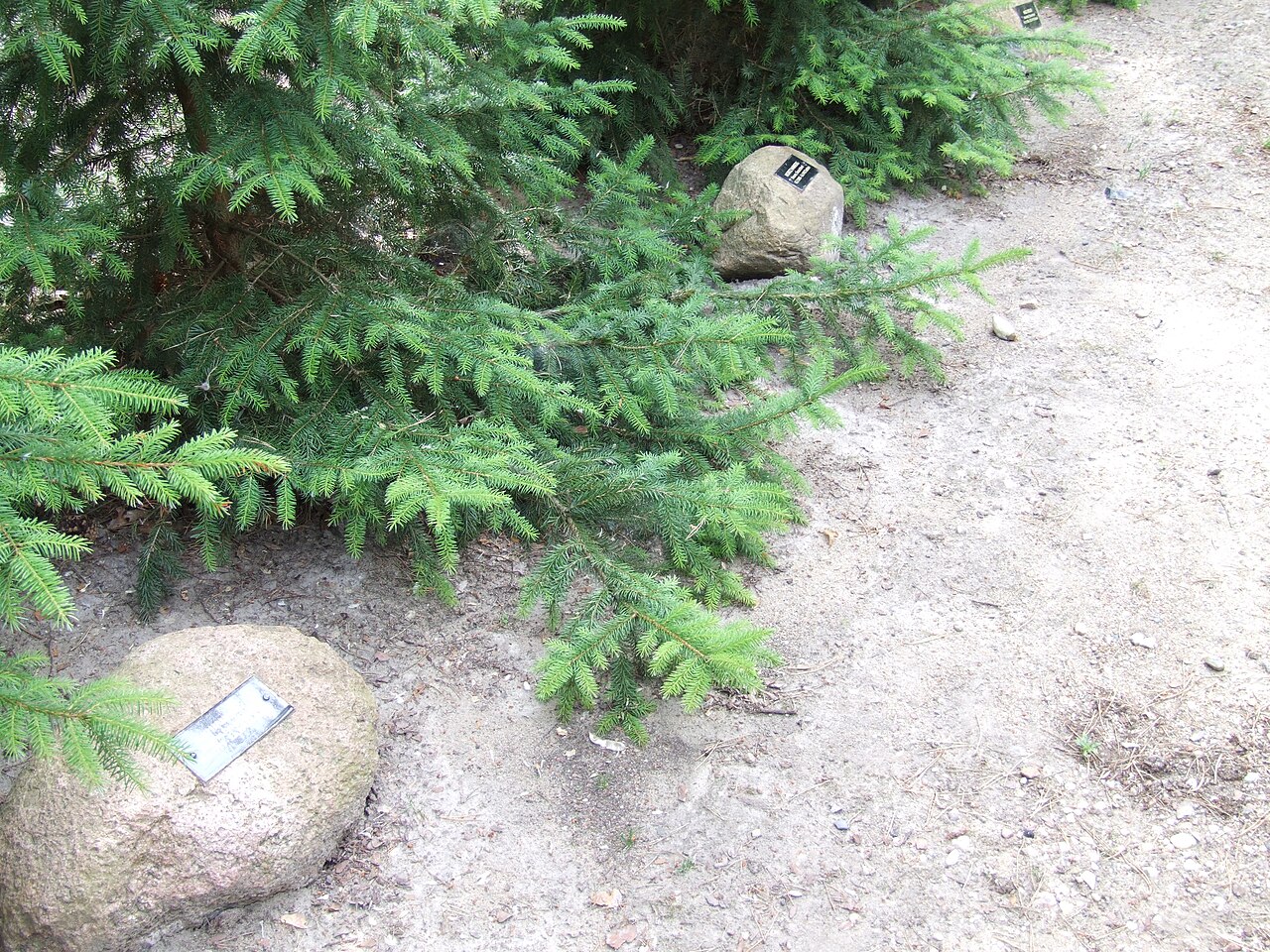
The revolt demonstrated that Nazi control was not absolute. Heinrich Himmler ordered Sobibor closed and dismantled. The gas chambers were demolished, the barracks were torn down, and the ground was plowed. Trees were planted and a farm was established on the site.
This was part of a wider effort to erase the traces of Operation Reinhard. Unlike Auschwitz, which was liberated with many structures still standing, Belzec, Sobibor, and Treblinka were largely destroyed before the end of the war. The Nazis tried to remove physical evidence, suppress records, and leave behind a landscape that could be mistaken for an ordinary forest or farm.
The erasure was incomplete. Survivors carried the history with them. Their memories described the camp’s layout, procedures, personnel, and victims. Their testimony became essential evidence precisely because the perpetrators had tried to make documents and buildings disappear.
Justice, Archaeology, and Memory
Postwar justice was partial. Several Sobibor personnel were tried in West Germany in the 1960s. Some received life sentences, while others received shorter terms or were acquitted. The proceedings established responsibility for individual crimes and produced important testimony, but only a small proportion of those who served at the camp ever faced a courtroom.
Decades later, archaeology began to recover what demolition had hidden. Excavations identified foundations, the location of the gas chambers, mass graves, and personal objects including shoes, combs, coins, and fragments of clothing. Research by Polish, Israeli, and Dutch teams helped map the camp and clarify its physical structure. In 2020, a memorial and museum opened at the site.
The memorial does not turn the camp into a spectacle. It marks the location, presents archaeological evidence, records survivor testimony, and remembers people deported from across Europe. The ground itself became evidence against the attempted erasure.
What Sobibor Reveals
Sobibor reveals how genocide can be organized through ordinary institutions. A decision made in a conference room became a railway schedule, a guarded platform, a list of procedures, and a killing site in a forest. Administrative language created distance between planners, transport officials, guards, and executioners, but distance did not remove responsibility.
The camp also shows the relationship between secrecy and atrocity. The Nazis hid Sobibor because they understood that the operation could not withstand public scrutiny. Dismantling the camp, planting trees, and building a farm were attempts to control what future generations would be able to know.
Finally, Sobibor is a history of resistance. The uprising did not undo the murder of those already killed, and most escapees did not survive the war. But it broke the system’s claim to total control. Prisoners planned together, acted under impossible conditions, killed members of the SS, escaped into the countryside, and preserved witnesses who could describe what had happened.
Remembering Sobibor is more than an act of mourning. It is a refusal to accept the perpetrators’ final objective: that the victims would disappear without names, testimony, or a trace in the landscape. The forest was meant to cover the crime. Instead, the ground, the evidence, and the memories continue to speak.