Some of the most important places in the history of the Holocaust are also among the least widely known. Belzec, Sobibor, and Treblinka were not conventional concentration camps designed for the long-term imprisonment of large populations. They were killing centers created for a narrower, more terrible purpose: to murder people as quickly as possible and conceal what had happened.
Together, these three sites formed the core of Operation Reinhard, the Nazi campaign carried out in occupied Poland between 1942 and 1943. The operation murdered approximately 1.7 million people, including roughly 1.5 million Jews, alongside Roma and others targeted by the Nazi regime. Its victims came from ghettos and towns across occupied Poland and from deportations organized elsewhere in Europe.
A colony at the center of Nazi persecution
The setting was the General Government, the German-administered portion of occupied Poland that had not been formally annexed to the Reich. Ruled from Krakow, it was treated as a colonial space: a source of labor, a destination for deportations, and a territory in which German authorities could impose racial policy with almost no restraint.
Before the war, Poland was home to more than three million Jews and had been a major center of Jewish religious, intellectual, and cultural life for centuries. The German invasion destroyed that world through forced labor, confiscation, starvation, ghettoization, and mass shootings. By 1942, Nazi leaders were moving from a policy of persecution and exploitation toward a coordinated effort to murder the Jewish population of occupied Poland.
Operation Reinhard was named for Reinhard Heydrich, one of the leading architects of the Nazi security apparatus. Heydrich was assassinated in Prague in 1942, but the operation that bore his name continued under the direction of officials including Odilo Globocnik. Its administrative machinery converted a continent-wide ideological project into schedules, transports, personnel assignments, and calculated murder.
Death centers built for speed
Belzec, Sobibor, and Treblinka were selected partly because they were connected to railway lines and could be reached from major Jewish population centers. Their design reflected their purpose. Deportees were transported in sealed or overcrowded trains, told that they were being resettled, and brought directly into a process intended to leave almost no time for them to understand what was happening.
At the arrival platforms, guards and auxiliary personnel separated people, took away their possessions, and directed them toward undressing areas. The language of resettlement and disinfection was used to maintain order and prevent resistance. In reality, most deportees were murdered within hours of arrival in gas chambers powered by engine exhaust.
The efficiency of the system depended on deception, coercion, and the participation of a large surrounding bureaucracy. Railway officials arranged timetables. Police units guarded transports. Administrators inventoried stolen property. Camp personnel sorted clothing, valuables, and documents. The killing centers were small compared with Auschwitz, but their purpose was more concentrated: people arrived, were murdered, and were replaced by another trainload.
Belzec and the opening of the operation
Belzec began mass gassing operations in March 1942. It was the first of the three Operation Reinhard killing centers to become fully operational, and its methods became a model for the others. Deportations arrived from the Lublin district, Galicia, and other areas of occupied Poland.
Historians estimate that approximately 600,000 people were murdered at Belzec, the overwhelming majority of them Jews. The camp’s location and the speed of its operation made escape extraordinarily difficult. Survivors were rare, not because the victims lacked courage, but because the site was designed to eliminate people and witnesses at the same time.
Belzec was also a place where the Nazis tested the limits of their own machinery. When the first gas chambers proved inadequate for the scale of deportations, they were replaced with larger facilities. The process was adjusted for capacity and reliability, turning mass murder into a system that could be repeated with mechanical regularity.
Sobibor and the revolt of October 1943
Sobibor began operating in the spring of 1942. As at the other killing centers, prisoners were forced to perform the labor that sustained the camp: sorting possessions, cutting hair, cleaning transport areas, and disposing of bodies. These forced laborers understood that they were being kept alive temporarily and that the camp’s guards intended to kill them when they were no longer useful.
In October 1943, prisoners organized an uprising. They developed a plan to kill several guards quietly, obtain weapons, and break through the perimeter. The plan did not unfold perfectly, but hundreds of prisoners escaped during the chaos. Many were killed in the surrounding area or later recaptured, yet some survived the war.
The revolt exposed the fact that the killing center could not be allowed to continue once its existence became more vulnerable. After the uprising, the Nazis dismantled Sobibor, destroyed its structures, removed traces of the camp, and transformed the site in an effort to conceal what had taken place there.
Treblinka and the scale of destruction
Treblinka was established in the summer of 1942, northeast of Warsaw. It became the largest of the three Operation Reinhard killing centers by number of victims. Deportations arrived from the Warsaw Ghetto and other districts of occupied Poland, as well as from places beyond Poland’s prewar borders.
Approximately 800,000 people were murdered at Treblinka, according to historical estimates. The camp was organized to make the transition from train to death appear orderly. A false station facade and carefully managed instructions helped create the impression that deportees were passing through a transit facility. That deception could not conceal the truth for long, but it often lasted long enough to prevent collective resistance at the point of arrival.
In August 1943, prisoners launched an armed revolt. They set parts of the camp on fire and broke through the perimeter. Hundreds escaped, although many were subsequently killed. A small number survived to testify about the camp. Afterward, the Nazis closed Treblinka, dismantled it, leveled the ground, and planted vegetation over the site.
The hidden labor behind the killing centers
The killing process depended on prisoners who were forced to maintain it. Sonderkommando units removed bodies, cleaned gas chambers, sorted possessions, and carried out other tasks under threat of death. Their position was designed to isolate them from other prisoners and from the outside world, but their testimony later became essential evidence.
People deported to the killing centers were stripped not only of life but also of property, names, and personal records. Clothing and luggage were sorted for reuse. Gold and other valuables were collected. Documents that might identify the victims were destroyed or absorbed into the administrative system. The objective was not simply to murder; it was to turn human beings into anonymous entries in a process that could be denied.
This is why the surviving evidence matters so much. Testimony, clandestine notes, photographs, transport records, German correspondence, postwar investigations, and archaeological work all help reconstruct what the perpetrators tried to hide. No single category of evidence tells the whole story. Together, they show the scale and organization of the crime.
Operation 1005 and the attempt to erase the evidence
As the war turned against Germany, Nazi authorities began a systematic effort to destroy the physical evidence of mass murder. Bodies were exhumed from burial pits and burned on open-air pyres. Ashes and bone fragments were crushed and scattered. Camp structures were dismantled. At some locations, the ground was plowed and planted with trees or crops.
This effort was part of Operation 1005, a broader program to erase traces of mass shootings and extermination sites. The perpetrators understood that physical evidence could support future prosecutions and that the landscape itself could testify against them. They attempted to transform killing centers into ordinary-looking farmland or woodland.
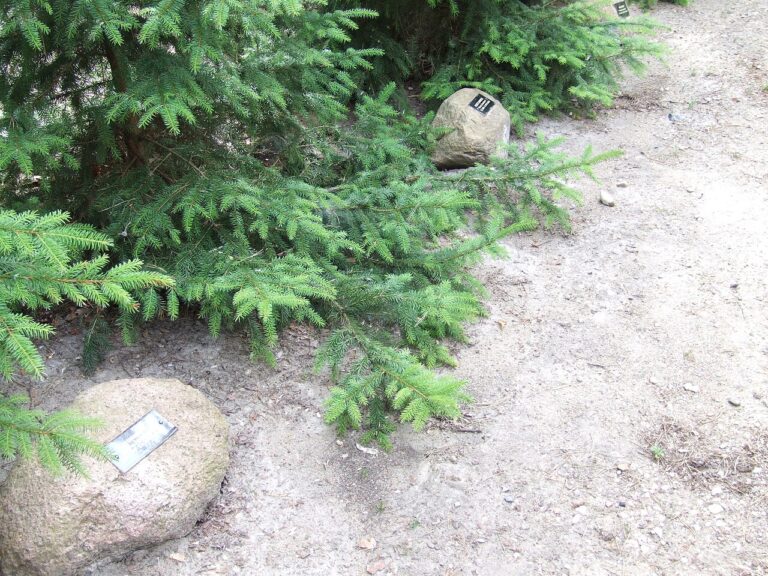
The effort was extensive, but it was not complete. Escaping prisoners carried memories and descriptions into the outside world. Local residents observed deportations and construction. Investigators later found artifacts, foundations, ash, bone fragments, and other traces beneath the altered landscape. The attempt to erase the crime became evidence of the crime’s deliberate concealment.
What survived
The Nazis tried to destroy both people and memory, but they could not control every witness or every record. Prisoners escaped from Sobibor and Treblinka. Individuals who survived forced labor gave testimony. Resistance fighters and underground networks documented deportations and killings. After liberation, survivors spent decades describing places that the perpetrators had tried to remove from the map.
Memory also survived through material acts. At former camp sites, memorials now mark the locations of mass graves and destroyed communities. Archaeologists have recovered objects that once belonged to victims: fragments of personal items, buttons, coins, and pieces of the infrastructure used to kill them. These objects do not replace testimony, but they provide a direct connection to lives that the Nazi system tried to reduce to statistics.
Why Operation Reinhard remains essential to understand
Operation Reinhard shows that genocide is not carried out by ideology alone. It requires offices, transport systems, buildings, guards, records, confiscation procedures, and people willing to perform each part of the process. It also shows how deception can be used as a weapon and how perpetrators may try to destroy evidence when they realize that their power is temporary.
The history of Belzec, Sobibor, and Treblinka is therefore not a marginal chapter of the Holocaust. It is central to understanding how the Nazi regime translated antisemitic fantasy into organized mass murder. The victims were not numbers. They were families, neighbors, workers, children, and communities with histories that the perpetrators sought to erase.
The attempt failed. The camps were dismantled, but the truth endured through survivors, records, investigation, and remembrance. To study these places carefully is to reject the perpetrators’ final demand: that the dead disappear without a trace. Remembering is not only an act of mourning. It is also a defense of historical truth.